Thermography Frequently Asked Questions
If you have any more questions that are not listed here, click here for more info
- What exactly is thermography and how does it work?
- How is thermography different from traditional imaging tests like mammograms or x-rays?
- Is thermography safe for everyone, including pregnant women?
- What kinds of health conditions can thermography help detect or monitor?
- How often should I have a thermography scan?
- Do I need a physician’s referral to get a thermography scan?
- What should I expect during a session at Thermography Advantage?
- Can thermography replace standard screening tests like mammograms?
- How do the additional services (e.g., Electro-Lymphatic Therapy, ZYTO Scan) offered by Thermography Advantage fit in?
- How should I prepare for my thermography appointment?
- How long does it take to receive my thermography results, and who reviews them?
- Can thermography help me track the effectiveness of my treatments or lifestyle changes?
Question: What exactly is thermography and how does it work?
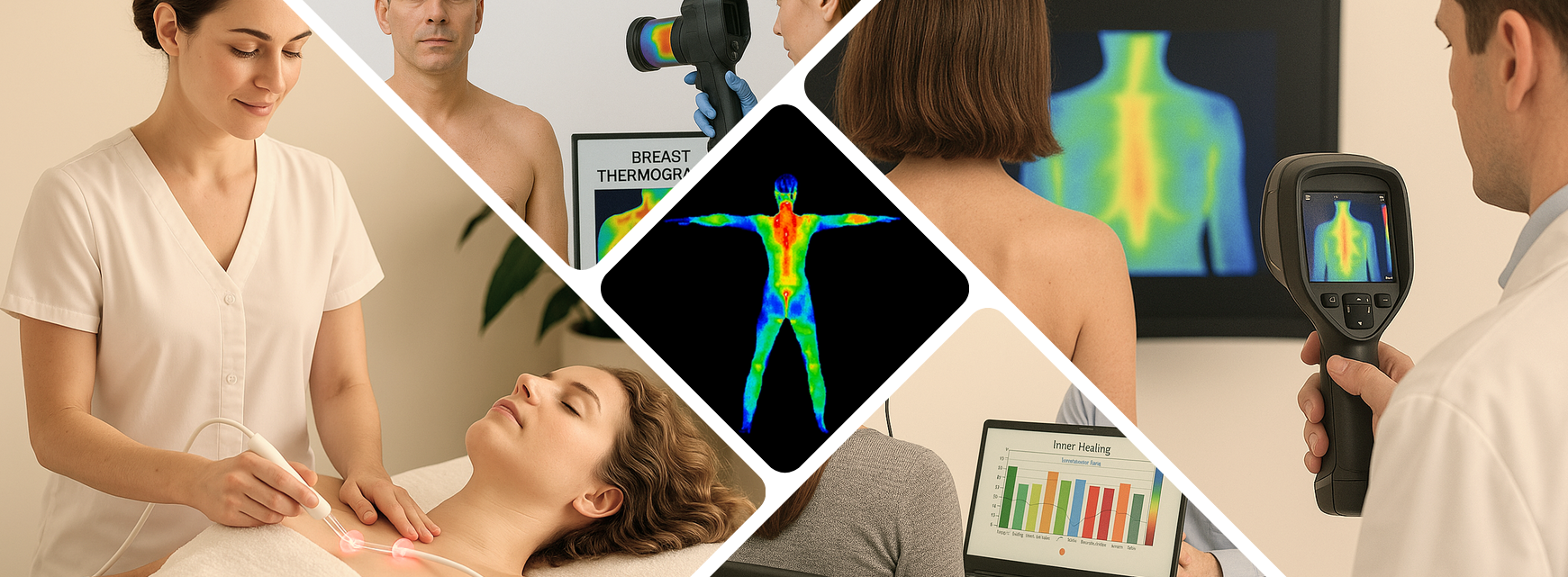
Answer: Thermography (also called digital infrared thermal imaging) is a safe, non-invasive imaging technique that detects subtle temperature changes on the surface of the body. These temperature differences may indicate inflammation, abnormal blood-flow patterns or other physiological changes long before they become symptoms.
Question: How is thermography different from traditional imaging tests like mammograms or x-rays?
Answer: Unlike mammography or x-rays, which visualize the structure of tissues using radiation, thermography visualizes function — the way your body is working. It uses no radiation, no compression, and is completely non-invasive.
Question: Is thermography safe for everyone, including pregnant women?
Answer: Yes — one of the benefits highlighted by Thermography Advantage is that the scans are radiation-free and non-compressive, making them safe for adults of all ages and, in many cases, safe during pregnancy.
Question: What kinds of health conditions can thermography help detect or monitor?
Answer: Thermography can detect minute temperature shifts and abnormal blood-flow patterns associated with inflammation, hormonal imbalance, nerve dysfunction, lymphatic congestion and early-stage disease. It’s used as a wellness tool to monitor physiology proactively.
Question: How often should I have a thermography scan?
Answer: At Thermography Advantage, the recommendation (for many clients) is to have a baseline scan and then annual or periodic follow-up scans as part of your wellness strategy. This allows you to detect changes over time.
Question: Do I need a physician’s referral to get a thermography scan?
Answer: No, a doctor’s order is typically not required. Thermography Advantage indicates that their thermal imaging service can be accessed without a direct referral, making it more accessible for proactive health monitoring.
Question: What should I expect during a session at Thermography Advantage?
Answer: You’ll undergo a digital infrared thermal imaging scan in a comfortable setting. The process involves capturing thermal images of your body (or relevant region) to evaluate temperature and blood-flow patterns. It’s painless, quick, and non-invasive.
Question: Can thermography replace standard screening tests like mammograms?
Answer: No — while thermography is a valuable adjunctive wellness tool, it is not a replacement for standard screening methods. Major organizations note that thermography should not be used alone for detecting conditions like breast cancer.
Question: How do the additional services (e.g., Electro-Lymphatic Therapy, ZYTO Scan) offered by Thermography Advantage fit in?
Answer: Thermography Advantage offers complementary services like Electro-Lymphatic Therapy (to support lymph flow and reduce inflammation), ZYTO Scan (bio-feedback energy scan), EVOX Therapy (emotional health support) and other modalities. These services are designed to enhance overall preventive wellness and support the thermal imaging findings.
Question: How should I prepare for my thermography appointment?
Answer: Step one, make an appointment. To get the most accurate results: avoid applying lotions, creams or deodorants to the scan region on the day of your appointment; maintain a consistent body temperature (avoid intense exercise or hot/cold exposure just before); and ensure the area to be scanned is free from clothing that could affect surface temperature readings. (Many thermography practices give specific prep-instructions; you should follow the guidance given by Thermography Advantage when scheduling your session.)
Question: How long does it take to receive my thermography results, and who reviews them?
Answer: At Thermography Advantage, your images are interpreted by trained professionals who specialize in thermal imaging analysis. Most clients receive their report within a few business days. The report includes detailed findings, comparison to previous scans (if available), and clear explanations that help you understand what your thermal patterns may indicate for your overall wellness.
Question: Can thermography help me track the effectiveness of my treatments or lifestyle changes?
Answer: Yes. Because thermography measures physiological changes over time, it’s an excellent tool for monitoring how your body responds to treatments, supplements, stress reduction, diet changes, or other wellness interventions. Comparing follow-up scans to your baseline can highlight improvements, areas that still need attention, or patterns that may warrant additional evaluation.
Electro-Lymphatic Therapy Frequently Asked Questions
If you have any more questions that are not listed here, click here for more info
Question: How soon might I notice results — and will I feel anything unusual after a session?
Answer: Many clients begin to notice subtle changes after their 3rd or 4th session: increased energy, a sense of lightness, or improved clarity.Some people describe temporary symptoms within 24–48 hours — like increased urination, a bit more fatigue, or slightly “loose” bowel movements — as the body flushes out toxins. These usually pass quickly, especially if you drink plenty of water and rest.
Question: How many sessions will I need — and how often?
Answer: For general maintenance or wellness support, once-a-week sessions are common and sufficient for many people. For deeper detoxification, chronic stagnation, or immune-support purposes, a series — often around 10 sessions — may be recommended.Your therapist can tailor frequency based on your body’s response, goals, and overall health profile.
Question: Can I combine Electro-Lymphatic Therapy (ELT) with other healthy habits to boost results?
Answer: Yes — combining ELT with good hydration, light exercise (like walking), and deep breathing can enhance lymph flow and help flush out toxins. Also, supporting detox with a clean diet and avoiding overly tight clothing may help maintain smoother lymph circulation between sessions.
Zyto Scan Frequently Asked Questions
If you have any more questions that are not listed here, click here for more info
Question: How long does a ZYTO scan take from start to finish — and is it uncomfortable?
Answer: A typical ZYTO scan session — from placing your hand on the cradle, running the scan, to generating the report — usually takes about 10–20 minutes. The process is painless and non-invasive — you simply rest your hand on the cradle, and the system measures subtle changes in skin electrical response.
Question: If my lifestyle or body changes (diet, stress, environment), should I repeat the scan — and how often?
Answer: Yes — because a ZYTO scan reflects your body’s responses “at the moment,” changes in stress levels, diet, hydration, or overall wellness may affect results over time. Many practitioners recommend repeating the scan periodically (for example every few months) to track patterns, monitor improvements or new stressors, and adjust wellness recommendations accordingly.
Question: What shouldn’t a ZYTO scan be used for — and what are its limitations?
Answer: A ZYTO scan is not a medical diagnostic tool — it cannot detect or diagnose diseases, replace lab tests, imaging, or professional medical evaluation. Rather, it’s a wellness-insight or decision-support tool meant to guide potential lifestyle, nutritional or supplement choices, in conjunction with other assessments.
EVOX Therapy Frequently Asked Questions
If you have any more questions that are not listed here, click here for more info
- Is there any preparation or aftercare I should follow before or after an EVOX session?
- Can EVOX Therapy be used more than once for different issues — or revisited later if new problems surface?
- Are there any circumstances where EVOX might not be recommended or limitations clients should know about?
Question: Is there any preparation or aftercare I should follow before or after an EVOX session?
Answer: Not much — EVOX is non-invasive, so you don’t need special prep (no fasting, drugs, or physical restrictions) before a session, which makes it easy to fit into a regular day. Some practitioners suggest you come with an open mind and a focus (a topic or issue you want to explore). After a session, many clients feel “lighter” or more emotionally open. Some may benefit from gentle self-care afterward (like drinking water, resting, journaling thoughts or emotions that surface) to support integration of any shifts in perception.
Question: Can EVOX Therapy be used more than once for different issues — or revisited later if new problems surface?
Answer: Yes. EVOX is often used as an ongoing tool rather than a one-time fix. Some clients go through a series targeting a particular theme (trauma, limiting beliefs, anxiety) and later return for new sessions when other issues come up (stress, relationship stuff, or life changes). Because EVOX works by “mapping” voice energy tied to perception, new life events may create new patterns — so periodic sessions can help re-assess and re-balance as needed.
Question: Are there any circumstances where EVOX might not be recommended or limitations clients should know about?
Answer: Yes — EVOX is intended as a complementary wellness tool, not a replacement for standard medical or mental-health care. It may not be suitable as a standalone treatment for serious psychiatric disorders or severe physiological conditions. Because EVOX works on emotional and energetic patterns, people with certain medical devices (e.g. pacemakers) or severe unmanaged mental illness should discuss suitability with a qualified healthcare provider before using it. Also: while many report benefits, long-term clinical evidence is limited; results may vary widely among individuals.
Cognyva Brain Optimization Frequently Asked Questions
If you have any more questions that are not listed here, click here for more info
- Who is an ideal candidate for Cognyva — and are there people who might benefit less or should proceed cautiously?
- How will I know if Cognyva is “working” — what kinds of improvements or changes should I look out for, and how soon might they show up?
- Is Cognyva meant to stand alone, or is it more effective when combined with lifestyle and cognitive-support habits?
Question: Who is an ideal candidate for Cognyva — and are there people who might benefit less or should proceed cautiously?
Answer: Cognyva tends to be sought by people who want to enhance cognitive performance (focus, memory, mental clarity), those experiencing brain-fog, stress, or early cognitive decline, or people looking for non-invasive brain support. However, because “brain optimization” is not a guaranteed cure, individuals with serious neurological or psychiatric conditions should consult a qualified medical provider first — Cognyva (or any brain-optimization system) should be seen as a supportive wellness tool, not a replacement for medical treatment.
Question: How will I know if Cognyva is “working” — what kinds of improvements or changes should I look out for, and how soon might they show up?
Answer: Users often report improvements such as sharper mental clarity, better focus, improved memory retention, greater energy or mental stamina, perhaps more restful sleep, or reduced brain fog after a series of sessions.
Because every brain is different, results can vary — some people may notice subtle benefits after a few sessions, while others might need more time or repeated treatments to experience noticeable effects.
Question: Is Cognyva meant to stand alone, or is it more effective when combined with lifestyle and cognitive-support habits?
Answer: Cognyva is more likely to yield noticeable and sustained benefits when combined with supportive brain-healthy habits: regular mental stimulation (learning new tasks or skills), adequate sleep, good nutrition, stress management, and physical activity — all of which contribute to neuroplasticity and brain health.
Think of Cognyva as a “brain tune-up,” but optimal results come when you treat the brain holistically.
Quantum Energy Wellness Bed Frequently Asked Questions
If you have any more questions that are not listed here, click here for more info
- What should I not wear — or should I wear less — during a QEWB session to get the best results?
- Are there any weight or size limitations — or physical restrictions — for who can use the bed safely?
- If I feel effects (relaxation, tingling, heat, emotion) during or after a session — is that “normal,” and when should I be concerned?
Question: What should I not wear — or should I wear less — during a QEWB session to get the best results?
Answer: While the QEWB will work through clothes, many providers recommend minimal, comfortable clothing (or direct skin contact) because the bed delivers heat, microcurrent/vibro-acoustic energy, and other subtle energies. This helps allow the energy/heat to transfer more directly to your body, potentially increasing comfort and effectiveness.
Question: Are there any weight or size limitations — or physical restrictions — for who can use the bed safely?
Answer: Yes — many providers of QEWB note that the bed supports up to about 300 lbs (or weight limits per their safety guidelines).Also, since the bed uses heat, sound/ vibration, and subtle energy fields, individuals with certain medical devices (like pacemakers) or heightened sensitivity might want to confirm suitability with a qualified healthcare professional before a session.
Question: If I feel effects (relaxation, tingling, heat, emotion) during or after a session — is that “normal,” and when should I be concerned?
Answer: It’s common for people to feel warmth, deep relaxation, light tingling, or even emotional release during or after a QEWB session — as the body’s circulation, nerve sensitivity, or energetic “load” adjusts. Many users describe a sense of calm, reduced tension, or improved mood/energy afterward. That said, the therapy is marketed as non-invasive and gentle. Providers typically recommend discontinuing or reducing exposure if you feel discomfort beyond mild warmth or relaxation — especially if you have pre-existing medical conditions.
AO Scans Frequently Asked Questions
If you have any more questions that are not listed here, click here for more info
- How should I interpret my AO Scan report — what do the “imbalances” actually mean, and what should I do next?
- Can factors like recent diet, stress, sleep — or even time of day — affect the AO Scan results?
- Is AO Scan a diagnostic tool — or how should a client understand its role in wellness & medical care?
Queion: How should I interpret my AO Scan report — what do the “imbalances” actually mean, and what should I do next?
Answer: When you receive your AO Scan results, the report may highlight “imbalances” — for example in organs, nutritional markers, toxins, or energetic frequencies — compared to a database of “optimal” frequencies.These imbalances don’t necessarily mean you have a diagnosed disease; instead, they are signals that some systems of your body might be under stress or not operating optimally. Many providers suggest using the scan as a baseline — then reviewing lifestyle factors (diet, stress, sleep, hydration, environmental exposure) and possibly integrating supportive therapies (nutrition, detoxification, holistic care) to address areas flagged by the scan.
Question: Can factors like recent diet, stress, sleep — or even time of day — affect the AO Scan results?
Answer: Yes — because the AO Scan measures subtle frequencies and energetic “states” of your body, transient factors (like what you ate, hydration, sleep quality, stress levels, or your overall emotional/physical state) may influence the reading. That means a scan taken under different conditions could produce different results. Because of this variability, some practitioners recommend repeating scans periodically (rather than relying on a single scan) to track trends — especially if you want to monitor changes after lifestyle adjustments or treatments.
Question: Is AO Scan a diagnostic tool — or how should a client understand its role in wellness & medical care?
Answer: AO Scan is described as a wellness-insight or bio-energetic assessment tool, not a conventional medical diagnostic device. Its purpose is to highlight potential imbalances or stressors in the body’s energetic / frequency landscape — which may sometimes correlate with underlying health or wellness issues — but it doesn’t provide definitive medical diagnoses. Most providers and literature advise that results should be interpreted cautiously and, if there are serious concerns, conventional medical tests and professional healthcare evaluation should be prioritized.
