Breast Thermography
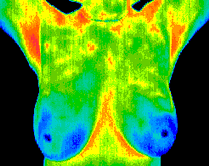
Breast thermography is a dedicated, high-resolution thermal imaging technique used to evaluate the breast region for subtle physiologic changes. Unlike structural imaging, thermography focuses on heat patterns, inflammation, and vascular activity—factors that may indicate early abnormalities long before they become visible on traditional scans. This noninvasive, radiation-free procedure can help identify concerns such as fibrocystic breast changes, localized infections, vascular or lymphatic irregularities, and other temperature-based indicators that may suggest abnormal tissue activity or early signs of breast cancer.
Because thermography evaluates function rather than structure, it is an excellent complementary tool to mammography, ultrasound, or MRI. When used together, these methods provide a more comprehensive picture of breast health, allowing for enhanced monitoring over time. For individuals seeking proactive wellness strategies, hormone-related assessments, or additional clarity between regular screenings, breast thermography offers a safe, comfortable, and informative option for ongoing breast health evaluation.
Region-of-Interest Thermography
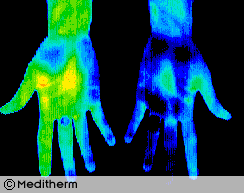
Region-of-Interest Thermography provides a focused, cost-effective way to evaluate a specific area of the body where you are experiencing discomfort, persistent symptoms, or ongoing concerns. Instead of scanning the entire body, this option targets a single region—such as the neck and shoulders, lower back, abdomen, hips, or knees—allowing for detailed thermal analysis while keeping the appointment efficient and affordable. This approach is especially valuable for individuals dealing with recurrent pain in one location, recovering from an injury, or navigating symptoms that have not been fully explained through other diagnostic methods.
By isolating a single region, thermography can highlight inflammation, circulatory patterns, nerve irritation, muscular imbalances, or heat changes related to chronic stress on the tissue. It serves as a powerful adjunct to chiropractic care, physical therapy, orthopedics, and general wellness evaluations. We tailor the thermal imaging to your priority region, ensuring that the results are meaningful, specific, and actionable for your ongoing health plan.
Full-Body Thermography
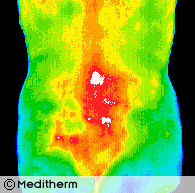
Full-body thermography is our most comprehensive screening option, capturing thermal patterns and physiological changes across the entire body in a single session. This in-depth scan allows us to evaluate multiple systems at once—musculoskeletal, vascular, neurological, lymphatic, and metabolic—making it ideal for anyone wanting a complete picture of their overall health. It is especially beneficial for athletes seeking proactive diagnostic support, individuals managing systemic conditions such as diabetes, autoimmune disorders, or chronic inflammation, and those who value preventive care and ongoing wellness monitoring.
By imaging the entire body, thermography can identify early signs of inflammation, areas of nerve trauma or irritation, circulatory imbalances, and temperature changes associated with nutritional disease, such as patterns seen in diabetes, chronic stress, or the long-term effects of alcohol use. This comprehensive view helps reveal connections between symptoms, detect issues that may not yet be producing noticeable discomfort, and support a more informed, whole-body approach to your health.
How It Works — Simple, Comfortable & Completely Non-Invasive
Reservation & Prep
Booking your appointment is the first step toward gaining deeper insight into your health, and we make the entire process as straightforward as possible. Once you schedule, you’ll receive a clear, simple preparation guide designed to ensure your thermographic scan is as accurate and meaningful as possible. Because thermography measures the natural thermal patterns of your body, a few temporary lifestyle adjustments help your system return to a calm, neutral baseline before imaging.
Your prep instructions will outline what to avoid in the hours leading up to your appointment—such as strenuous exercise, hot showers, lotions or oils on the skin, caffeine, smoking, or extended sun exposure. Each of these can temporarily increase circulation, alter surface temperature, or stimulate hormonal activity, which may interfere with the precision of your scan. By skipping these activities for a short window, you allow your body to stabilize so the camera can capture your most authentic physiological patterns.
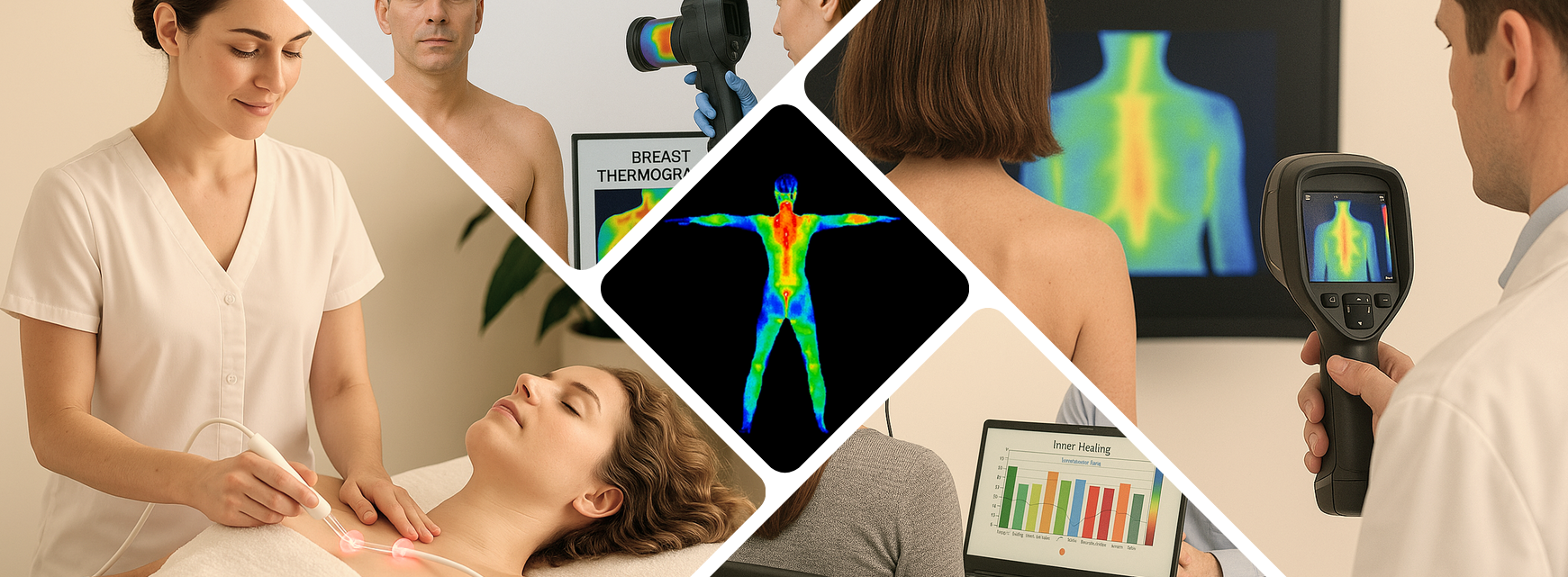
Most clients find this preparation surprisingly easy and far less restrictive than expected. There are no medications, injections, compression, or discomfort of any kind. Thermography is entirely non-invasive, which means no touching, no radiation, and no contact with the equipment. You simply follow the brief prep guidelines, arrive for your appointment, and relax while the imaging specialist captures a series of thermal photographs in a temperature-controlled room.
This short preparation period enhances the accuracy of your results, helping reveal inflammation, nerve activity, circulatory shifts, lymphatic congestion, stress responses, and other physiologic signals that may not be visible through traditional structural imaging. With just a little planning, you’ll walk into your session fully ready for a smooth, comfortable, and highly informative thermographic experience.
Your Imaging Session
When you arrive for your thermography appointment, you’ll be welcomed into a calm, private imaging room designed to help your body settle into a neutral, stable temperature. Because thermography measures the natural heat patterns coming from the surface of your skin, the environment plays an important role in making sure your results are accurate. The room is kept at a comfortable, standardized temperature, free from drafts, bright lights, or anything that could disrupt your body’s natural thermal balance. Most clients appreciate this quiet moment; it gives you time to breathe, relax, and let your system settle before imaging begins.
During this brief acclimation period, which typically lasts 10–15 minutes, your skin’s surface temperature naturally evens out. This allows the infrared camera to capture clear, authentic thermal patterns without interference from recent physical activity, external heat sources, or changes in blood flow. You don’t have to do anything during this time—simply relax and allow your body to adjust.
Once your body has acclimated, your thermographer will gently guide you through the imaging portion of your appointment. Thermography requires no touching, pressure, compression, radiation, or contact of any kind. Instead, you’ll stand or sit in front of a high-resolution infrared camera while the thermographer provides simple instructions on how to position your body. These poses are easy, natural, and comfortable—far from the awkward or uncomfortable positions associated with many traditional imaging methods. Lights will be dimmed for modesty.
The camera will quietly capture a series of thermal images from various angles. For region-specific sessions, only the area of concern is imaged, allowing for a quicker, focused capture. For full-body appointments, the thermographer will guide you through a more complete sequence, ensuring that each major region is recorded thoroughly and consistently. Throughout the session, the camera never touches you; you simply follow the thermographer’s cues while the system records your body’s unique heat signatures.
Most imaging sessions take between 20 and 40 minutes, depending on the type of scan and the number of regions being evaluated. Many clients are surprised by how quick, smooth, and comfortable the entire process feels.. Once imaging is complete, you’re free to return to your day without downtime or recovery.
The goal of each session is to create a clear thermal map that reflects what your body is doing beneath the surface. These images allow us to identify temperature variations, inflammation patterns, circulatory changes, nerve-related signals, lymphatic congestion, and other physiologic indicators that may point to underlying issues. All of this is achieved in a safe, comfortable, non-invasive environment—making your imaging session not just informative.
Establishing Your Baseline & Follow-Up Review
Your baseline scan is the cornerstone of your thermographic health profile. Because thermography measures physiology rather than anatomy, the way your body functions over time is what matters most. Thermal imaging evaluates heat patterns, inflammation, vascular behavior, lymphatic activity, and temperature asymmetries—signals that reflect how your body is responding to stress, lifestyle, injury, or underlying health conditions. These patterns are meaningful, but what makes them truly powerful is consistency. A single scan provides valuable information, but two scans establish a recognizable trend unique to you.
For this reason, every new client is encouraged to return for a follow-up scan approximately three months after their initial appointment. This second imaging session is essential to establishing an accurate and reliable baseline. Your body changes daily in small ways, but true physiological patterns reveal themselves over time. By comparing your first and second scans, we can distinguish between temporary fluctuations and genuine thermal signatures that represent your individual health profile.
This follow-up scan allows us to:
-
Compare your thermal patterns for stability or change, giving us clearer insight into how your body is functioning across multiple systems.
-
Identify trends that aren’t obvious in a single scan, including small but meaningful shifts in inflammation, circulation, or nerve activity.
-
Strengthen the accuracy of your long-term thermographic record, creating a personalized baseline that future scans can be measured against.
Once your baseline is confirmed, thermography becomes an incredibly powerful monitoring tool. From that point forward, your annual scans serve as a physiologic progress report—showing us what has remained stable, what may be improving, and what may require more attention. These yearly comparisons can reveal subtle changes long before symptoms appear, giving you the earliest possible insight into developing concerns.
For clients with specific issues—such as chronic pain, autoimmune activity, hormone imbalance, vascular concerns, or unresolved symptoms—more frequent imaging may be recommended. Thermography can also be used to monitor recovery after injury, track the effectiveness of therapeutic interventions, or provide supporting data as part of a proactive wellness plan.
Unlike structural imaging, thermography doesn’t look for masses or anatomical changes. Instead, it helps reveal why your body may feel a certain way by identifying the physiologic patterns occurring beneath the surface. With a consistent baseline and ongoing monitoring, we’re able to track your body’s responses over time with precision and clarity.
Your baseline scan isn’t just a first step—it’s an investment in long-term health awareness. By building a reliable thermographic history now, you create a foundation that supports early detection, proactive wellness, and more informed decision-making for years to come.
Results, Reporting & Your Personalized Next Steps
After your imaging session, your thermographer and interpreting thermology specialists prepare a detailed, easy-to-understand report. This includes:
-High-resolution images of your scan
-Color-coded thermal maps
-A professional interpretation of findings
-Notes on any thermal asymmetries, vascular patterns, inflammation, or physiologic changes
-Monitoring recommendations
If we observe any significant patterns or changes that suggest a structural or medical concern, we’ll clearly explain what they mean and recommend appropriate follow-up with your preferred healthcare provider. Many clients use these reports to support ongoing wellness plans, pain management, integrative care, injury recovery, or preventive health discussions with their physicians.
Our goal is never to alarm — it’s to empower you with information so you can make confident, informed decisions about your health.
